
How To Stop Paying the ADHD Tax
If you missed part one, start there. This post makes a lot more sense with that context.
In my last article I made the argument that a lot of us aren’t struggling because our brains are wired wrong. We’re struggling because we’ve built a life that asks far too much of them, and then we wonder why things keep falling through the cracks.
So if the problem is the load, the answer isn’t a better system for managing more of it. The answer is changing the conditions you brain is operating in.
These aren’t hacks or productivity tips. These are the basics, and most of us are skipping them because we’ve been too busy trying harder with better tools.
1. Sleep
I’m starting here because it’s the one nobody wants to hear, and also the one that makes everything else on this list actually work.
A sleep deprived brain is not going to calendar its appointments. It’s not going to remember where it parked. It’s not going to make good decisions about what to eat or whether to go outside. It’s just going to survive the day and hope for the best.
It’s also worth noting that different Human Design types have different sleep needs and practices, and that deserves it’s own article. But “get more sleep” isn’t one size fit’s all. How you sleep, when you sleep, and how much you actually need varies with your Human Design.
If you’re doing everything else right and still feel like your brain is misfiring, look at sleep first.

2. Eat like your brain depends on it. Because it does.
I’ve eaten “badly” for at lease a week straight and today I am genuinely struggling to string thoughts together. I had to run this whole blog post through AI so that it was understandable. Today marks day one of clean eating for a week, something I do when I need to reset my brain. The difference is not subtle.
This isn’t about being perfect or never eating a melting moment (my weakness) ever again. It’s about recognising that your brain is a physical organ and it runs on what you feed it. Nourish it and it functions. Starve it of what it needs and it starts dropping things.
3. Use a calendar. One calendar. And actually use it.
I know someone who runs their own business. Clients, appointments, assignments, trainings, bills, the works. A full life by anyone’s measure.
If you checked their calendar on any given week, you’d be lucky to find two things on it. Everything else lives in their head. So when they can’t remember if an appointment was this Wednesday or next, the admin team has to chase it down.
Your brain is incredible. I genuinely marvel at some of the things it holds onto. But it cannot hold everything. Your calendar can though. Put it all in there, every appointment, deadline, bill due date, and then actually look at it. Not tasks though, they belong somewhere else.
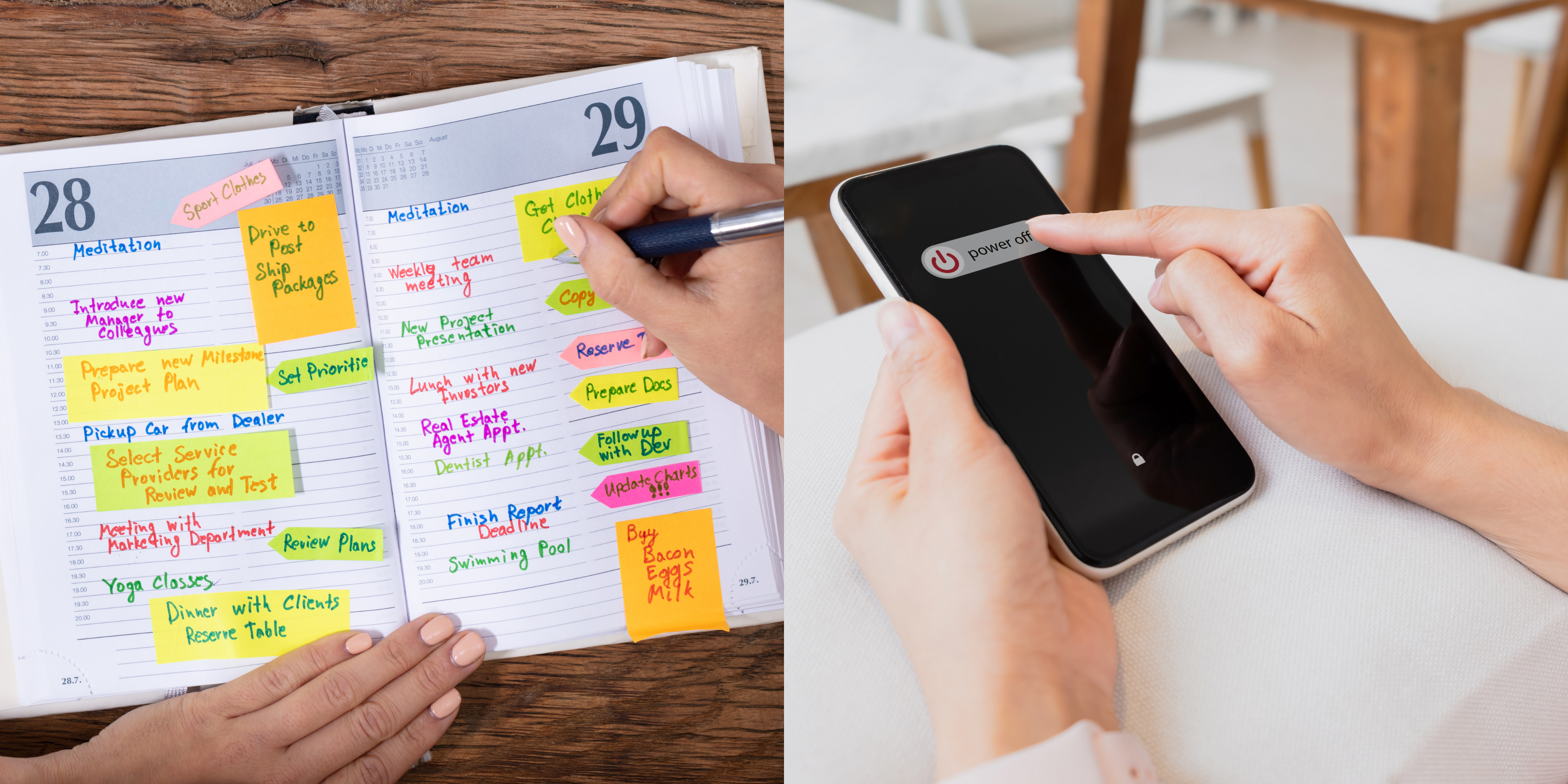
4. Turn off your notifications
Your brain is exhausted from never being allowed to finish a thought. Every notification is an interruption, and every interruption means starting over.
Turn them off. Not just on silent, actually off. Give your brain the occasional gift of a complete thought loop, start to finish, without something pinging for its attention in the middle.
5. Do less
This is the one people resist the most, and I understand why. We’ve been thoroughly sold the idea that doing more is the path to having more, being more, achieving more.
But who is that actually working for? Not the woman paying $300 fines because her brain ran out of room. Not the person laying awake at 2 am mentally cataloguing everything that didn’t get done.
Do less. Deliberately, intentionally, unapologetically less. When your brain has fewer things to stay on top of, it can actually stay on top of some of them. Let go of the guilt about it, the guilt is part of the same problem.

6. Move your body
My theory, completely unverified (and I am absolutely open to someone sending me studies): anxious overthinking is what happens when a body designed to move spends most of it’s day sitting still. All that energy has to go somewhere, and if it’s not going into your legs, it’s going into your head.
Move. Not to punish yourself or hit a goal, just to give your body something physical to do with all that energy.
7. Go outside
Somewhere with actual nature, not just a car park. Trees, water, sky, whatever you can access. Breathe. Remember that there is a whole world that exists completely independently of your to do list, and it has been doing just fine without your input.
It regulates your nervous system in a way that nothing on a screen can replicate. And a regulated nervous system is a brain that can actually function.
None of these are revolutionary. That’s the point. We’ve overcomplicated this so thoroughly that the basics feel too simple to bother with. But if you’re paying the ADHD tax regularly, I’d put money on at least three of these being missing from your life right now.
Start there. Not with a new planner or productivity course. With sleep, food, movement and a calendar you actually open.
If you want to understand how your specific design affects the way you process information and make decisions, that’s exactly what we go through in an Alignment Support Session. Sometimes knowing how you’re wired changes everything about how you approach this stuff.